
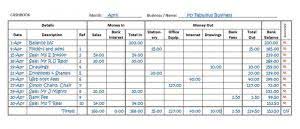
Forensic accountants investigate financial information to find areas of fraud or misconduct, usually for law enforcement agencies. Like auditors, they look closely at a company’s (or person’s) financial records; unlike auditors, their goal is to assess for illegal financial activity, such as embezzlement or fraud. Businesses typically have many financial aspects accountancy meaning that need to be recorded and reported, such as non-liquid assets, (like real estate), revenue streams, investor cash, and shareholder equity. Classification means statement setting out for a period where all the similar transactions relating to a person, a thing, expense, or any other subject are groped together under appropriate heads of accounts.
What is the difference between accountancy and accounting?
When the data is produced in reports for the use of individuals or companies outside the organisation, the process is called ‘financial accounting’. As you navigate the world of finance, understanding Accounting Conservatism will empower you to make more informed decisions that reflect a realistic and cautious outlook on financial reporting. Take this knowledge into your future financial analyses and investment strategies, and continue to explore how these principles can be applied to different scenarios in your financial journey. Embrace the mindset Bookkeeper360 Review of conservatism, and you’ll be better prepared to navigate uncertainty with confidence.

Follow the standard accounting cycle
The fixed asset accountant, general ledger clerk, and tax accountant are most likely to be involved in the use of journal entries. There may be a number of closing entries at the end of each reporting period that the general ledger clerk is tasked with entering into the accounting system. It’s built on the foundation of double-entry accounting, a system in which you record each transaction in two book entries.
- On one hand, businesses may prefer to report at the market rate because that reflects current value.
- We verify all rates, fees, and product information using authoritative primary sources including official U.S. government websites, financial institution websites, and regulatory bodies.
- The chief financial officer (CFO) is the top-ranked person regarding a company’s finances.
- Shaun Conrad is a Certified Public Accountant and CPA exam expert with a passion for teaching.
- These professionals may create budget reports or analyze budget proposals, and even ensure that a company sticks to its budget once it’s put in place.
- In double-entry accounting, every debit (inflow) always has a corresponding credit (outflow).
Effects of the OBBBA on higher education
Below is a break down of subject weightings in the FMVA® financial analyst program. As you can see there is a heavy focus on financial modeling, finance, Excel, business valuation, budgeting/forecasting, PowerPoint presentations, accounting and business strategy. A contingent liability is not recognised in the statement of financial position. However, unless the possibility of an outflow of economic resources is remote, a contingent liability is disclosed in the notes. IAS 37 defines and specifies the accounting for and disclosure of provisions, contingent liabilities, and contingent assets. Why is it that crediting an equity account makes it go up, rather than down?
- The creation of these reports typically occurs monthly and is used for internal planning and decision-making.
- It is important for companies to establish credibility with these external users through relevant and reliable accounting information.
- Modern accounting relies heavily on technology to streamline processes and improve accuracy.
- Use them as a tool to determine growth as well as the current financial standing of your business.
- A general accounting degree may also include coursework in business finance, financial systems, and cost accounting.
#2 Journal Entries
Typically, becoming a certified accountant requires a combination of education (a degree in accounting or a related field), passing certification exams (like the CPA exam), and gaining relevant work experience. An accountancy body regulates the activities of accountants, ensuring adherence to ethical standards and professional guidelines. Examples include the American Institute of Certified Public Accountants (AICPA) and the Chartered Institute of Management Accountants (CIMA). Explore a career in external accounting and learn business valuation and due diligence skills with this free job simulation from Ryan LLC.
Prospective Investors

We believe everyone should be able to make financial decisions with confidence. While we don’t cover every company https://nhakhoangocduc.com/truth-about-truckers-bookkeeping-service-is/ or financial product on the market, we work hard to share a wide range of offers and objective editorial perspectives. Accounting is critical for groups and individuals and operate as the basis of economic selection-making and compliance.

In this article, you will learn about the core tenets of this principle, its advantages and disadvantages, and how it influences your investment decisions. Proper accounting helps organizations ensure accurate reporting of financial assets and liabilities. Internal Revenue Service (IRS) and the Canada Revenue Agency (CRA), use standardized accounting financial statements to assess a company’s declared gross revenue and net income. The system of accounting helps to ensure that a company’s financial statements are legally and accurately reported. Accounting conservatism is a financial reporting principle that dictates how accountants should approach the recognition of expenses and revenues.
Products and services
Information is relevant to the extent that it can potentially alter a decision. Relevant information helps improve predictions of future events, confirms the outcome of a previous prediction, and should be available before a decision is made. Reliable information is verifiable, representationally faithful, and neutral. The hallmark of neutrality is its demand that accounting information not be selected to benefit one class of users to the neglect of others. While accountants recognize a tradeoff between relevance and reliability, information that lacks either of these characteristics is considered insufficient for decision making.
